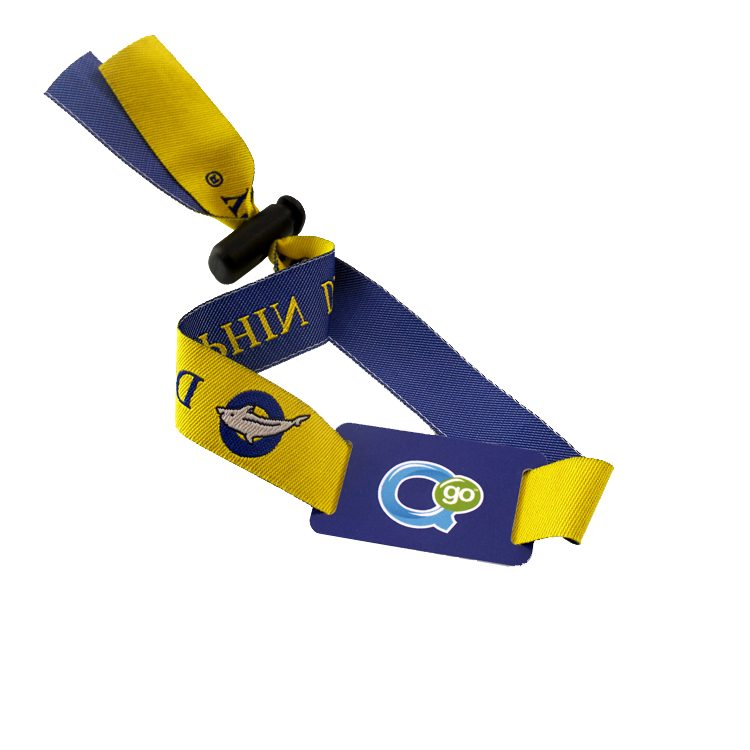
Fabric RFID Wristband
A textile strap, RFID tag face and selected closure. Approve woven or printed artwork and worn use with the event platform.
Custom event credentials · Bulk supply
Custom printed RFID wristbands and badges, with numbering and agreed encoding. Share your quantity, delivery country and arrival date for a quote. We can help shortlist samples if your chip or event platform is undecided.
Start with quantity, destination and arrival date; unknown details can stay open · Sample terms
Download the event supplier brief (PDF)
Updated · Product selection and sample planning
Confirm the chip, construction and system fit for your configuration.
Before choosing a product
Confirm the ticketing, access or cashless provider and exact reader requirements. A familiar chip name or a successful NFC tap does not demonstrate admission or account compatibility.
Wear duration, wearer sizes, reuse and removal policy determine the assembly. Test the selected strap, tag face and closure together rather than treating fabric or silicone as a fixed lifetime.
Artwork, access-zone colors, printed numbers, QR codes and chip data are different fields. Approve their mapping and the issue/replacement process with the event provider.
Fabric, paper-style, disposable PVC and silicone have different fit and closure questions. Select candidates by issue and wear policy, then test the exact chip, finished assembly and event transaction. A single-use fastening does not itself cancel an electronic ticket.
Scroll across the table to compare all columns.
| Format | Workflow to evaluate | Physical checks | Application checks |
|---|---|---|---|
| Fabric wristband | Branded guest wear across a defined event period | Compare woven or printed artwork, tag face, wearer fit and a selected one-way slider or reusable bead | Check enrollment and worn reads at each gate; test re-entry, expiry and replacement under the platform rules |
| Paper-style or Tyvek-listed wristband | A short event or day-pass credential when the proposed substrate and wear conditions suit | Select the snap or adhesive format; check the exact substrate grade, usable wrist range, overlap and moisture exposure | Compare printed ticket number, chip value and gate record; test valid, used and expired states |
| Disposable PVC / vinyl wristband | Temporary admission with a selected single-use snap format | Choose the model and print area; test closed fit, snap behavior, marking and removal evidence | Test the reader transaction and ticket cancellation/replacement rules separately; cutting the strap may leave the inlay readable |
| Silicone wristband | A removable or reusable credential where the venue has an issue and collection plan | Select the actual mold and size mix; check closure, decoration and agreed water or cleaning exposure | Verify issue, authorized access or account use, expiry and reassignment if bands will be reused |
| Badge or card | Visible identity for conferences, exhibitors, staff or VIPs | Print, holder/lanyard, slot position and presentation near the body | Reader transaction, access groups and consistent QR/electronic-record mapping |
| NFC sticker | A deliberate phone tap on a booth, poster or display | Label position, adhesive, surface/metal construction and visible tap instruction | Supported phones, approved NDEF content or app and the maintained destination; not automatic ticket validation |
Conferences · Exhibitors · Staff credentials
A conference badge has two jobs: show a person’s role and present the credential your event system accepts. Start with a printed PVC RFID card or evaluate a paper RFID card for the required handling period. Agree the finished size, chip and issuance method before designing the holder or ordering print.
Start with the badge format, quantity, delivery country and arrival date. Add the platform or chip if known; leave undecided details blank.
Compare PVC and paper badge formatsSpecify width, height, thickness, portrait or landscape artwork, and the intended holder. Confirm any slot or hole position against the antenna layout before punching. Test the finished card in its holder while worn; request separate confirmation for custom sizes, holders and lanyards.
Decide whether badges arrive blank, preprinted or prepared with agreed electronic data. For on-site printing, name the printer, stock requirements and encoding equipment. Ask who adds names, role colors and QR codes, and who enrolls late registrations or replacements.
Specify quantities by attendee, exhibitor, staff or VIP design, plus spares and packing order. Have the platform owner test entry, session permissions, denied access and replacement. Define what staff should do when a reader or network is unavailable.
Print and encoding proof
Agree an import layout with the event provider and test it with synthetic records. These fields need a defined relationship; they need not contain the same value.
A shortlist for your evaluation
Open the product page for its specification and evaluation requirements. These are hardware candidates; system integration and sample acceptance depend on your project.
A textile strap, RFID tag face and selected closure. Approve woven or printed artwork and worn use with the event platform.
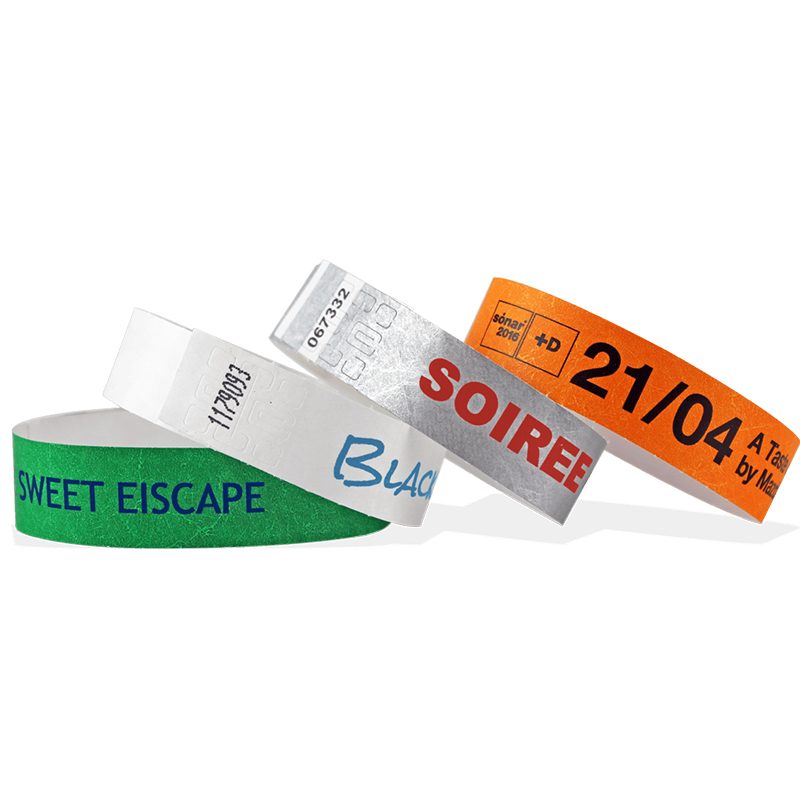
Compare the published snap and adhesive formats, usable fit and actual substrate grade. Approve the printed ticket-to-chip mapping on a finished sample.
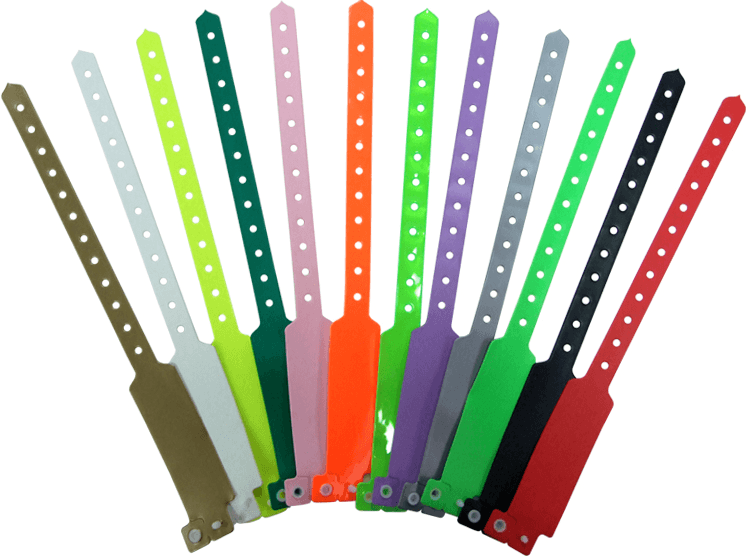
A vinyl-style band with model-specific dimensions and a single-use snap. Select print area and wearer range; the platform must handle cancellation and replacement.
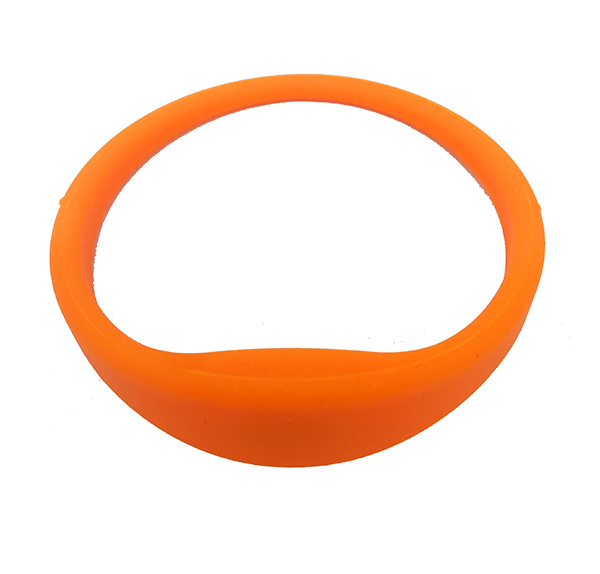
A molded wearable candidate with a selected size, closure and reuse policy. Validate the assembly, cleaning exposure and authorized venue transaction.
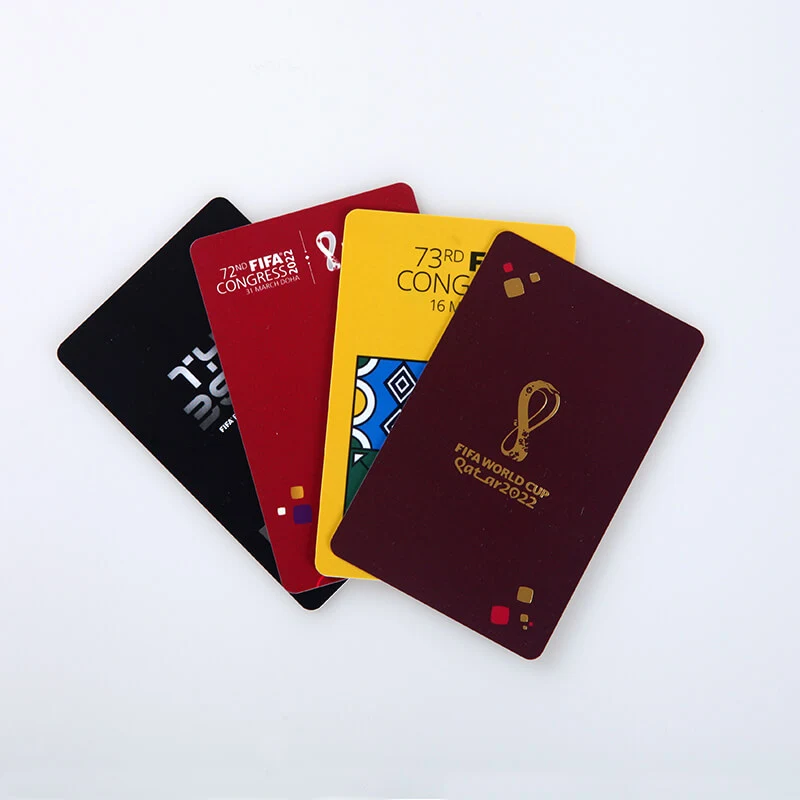
A printed credential for visible event identity, staff or exhibitors. Test the holder, reader and visible/electronic-record mapping.
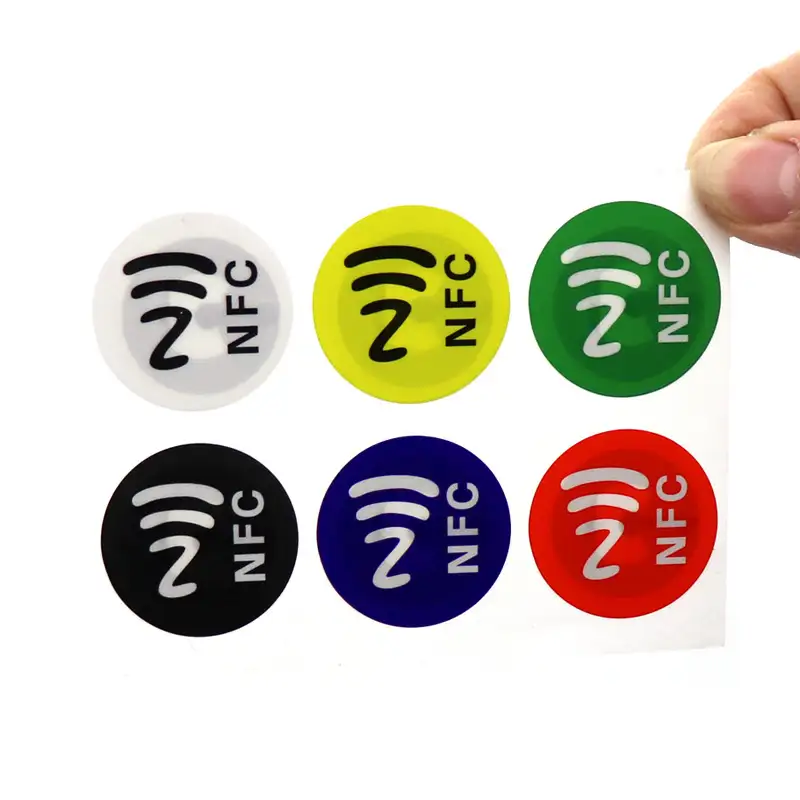
An adhesive NFC label for a deliberate phone interaction at a booth or display. Specify the content, phones and mounting surface.
From shortlist to approval
Approve the reader transaction, finished credential and issuance data together. Confirm availability and commercial terms for each proposed sample configuration before setting the production calendar.
Buyer questions
Choose a wristband when a worn credential suits the issue and removal policy. A badge or card is useful when a photo, name, role or other visible identity is needed. Neither format establishes compatibility: the event provider must approve the chip, reader, data and transaction in the selected assembly.
NFC uses supported 13.56 MHz technologies for deliberate interactions such as a phone tap or compatible reader transaction. RFID also includes other technologies, including UHF systems that need their own reader equipment. Choose the exact protocol and application; frequency does not determine access rules or security.
A compatible wristband can identify an account or perform a supported credential transaction in an event cashless platform. It does not by itself provide a wallet, bank-card payment acceptance, balance controls, refunds or settlement. The event provider must configure those functions, security and offline reconciliation and test them with the intended credential.
Only after the provider confirms the exact reader, protocol, chip/application, issuer data and enrollment method. Use non-production test credentials to demonstrate the required transaction. A reader detecting a UID or a phone opening a URL is not proof that the ticketing platform will authorize entry.
They combine a printed badge or card with contactless electronics and are often carried in a holder or on a lanyard. The connected system may use the credential for entry, sessions or restricted zones. Printed identity and any QR fallback need their own controlled mapping to the same intended record; adding QR does not create two-factor authentication.
Use it for a defined phone interaction on a booth, poster, package or display. Confirm the intended content, target devices, surface and tap instruction, then test the installed label. A public link does not automatically record attendance, validate a ticket or create a cashless account; any such transaction needs the appropriate application.
Request a quote for the selected chip, strap or mold, closure, artwork, encoding, quantities and packing. Ask for setup, sample, production and freight charges separately. Sample terms are described in the sample policy; the production quote should state its validity and schedule. A generic material-based price tier is not a quote for your credential.
Yes, first shortlist the few constructions and chip configurations that match your reader, wearer range and deadline, then ask which are currently available as stock samples. Free stock samples (up to 5 pieces) — buyer covers DHL/FedEx freight ($25–60), refunded 1:1 against the first production order over $500. Custom printed or encoded samples are quoted separately, with the selected assembly and preparation time confirmed before shipment. A sample request is not a reservation of production capacity.
Use the intended reader and software with the finished band worn as guests will present it. Check wearer fit, closure and print legibility, then test valid, used, expired, revoked and replacement credentials; required re-entry or account rules; and the provider’s offline/fallback procedure. Record pass/fail conditions and the agreed water, cleaning or wear exposure rather than approving a single successful tap.
Yes, with a defined purpose for each. Wristbands and badges can be different credential formats if the platform supports them, while stickers can provide a separate phone interaction. Assign each format its own configuration and acceptance checks, and avoid collecting or exposing attendee details in publicly readable tag content.
Send dates, location, user groups and quantities; platform and reader details; credential and closure requirements; artwork; non-sensitive encoding/import requirements; sample checks; packing sequence and required arrival date. The system owner should handle live keys and attendee records through a separately agreed secure process.
Check the basis for the decision
These references describe published chips, standards, product examples or systems. Confirm the offered RFIDAK configuration and your installation separately.
Supported NFC communication, tag types and NDEF. These are separate from event access rules and account software.
Phone-side NFC tag and NDEF handling. An NFC payload does not implement an event’s admission or account workflow.
Guidance for MIFARE installations. Chip features need appropriate application, key and credential-lifecycle controls.
Make the next conversation useful
Start with the wristband or badge format, quantity, delivery country and required arrival date. Add the platform or chip if known. We can review options and quote the physical credentials, printing, agreed encoding, sample costs and delivery plan; your event provider handles platform setup and operation.
If a detail is undecided, mark it for review. Use non-sensitive specifications at inquiry stage; arrange secure personalization separately with the authorized platform owner.
May we use Google Analytics cookies to measure visits and inquiry actions? Your choice does not affect the contact form. Cookie details